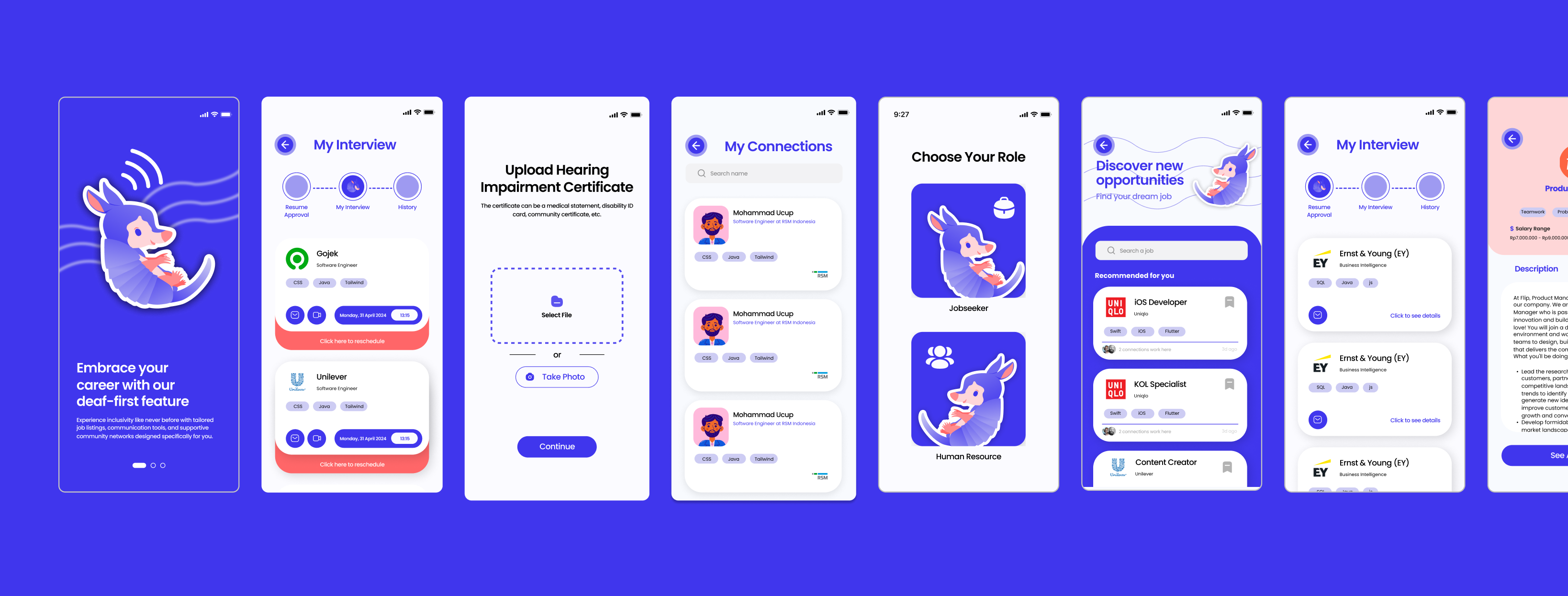
Deafriends - Inclusive Job Portal for Deaf Community
Deafriends is an inclusive job portal designed to bridge communication gaps between deaf job seekers and recruiters through accessible job discovery, application tracking, and interview experiences.
Timeline
February 2024 - June 2024
Role / Context
UI/UX Designer - Academic Team Project
Leveraged Skills
PROBLEM
How can deaf job seekers and recruiters communicate and complete the recruitment process without communication barriers?
Existing job portals are not designed to accommodate sign language communication, accessible interviews, or deaf-friendly information structures. On the recruiter side, Human Resource teams also lack tools and guidance to effectively recruit deaf candidates, resulting in missed opportunities
SOLUTION
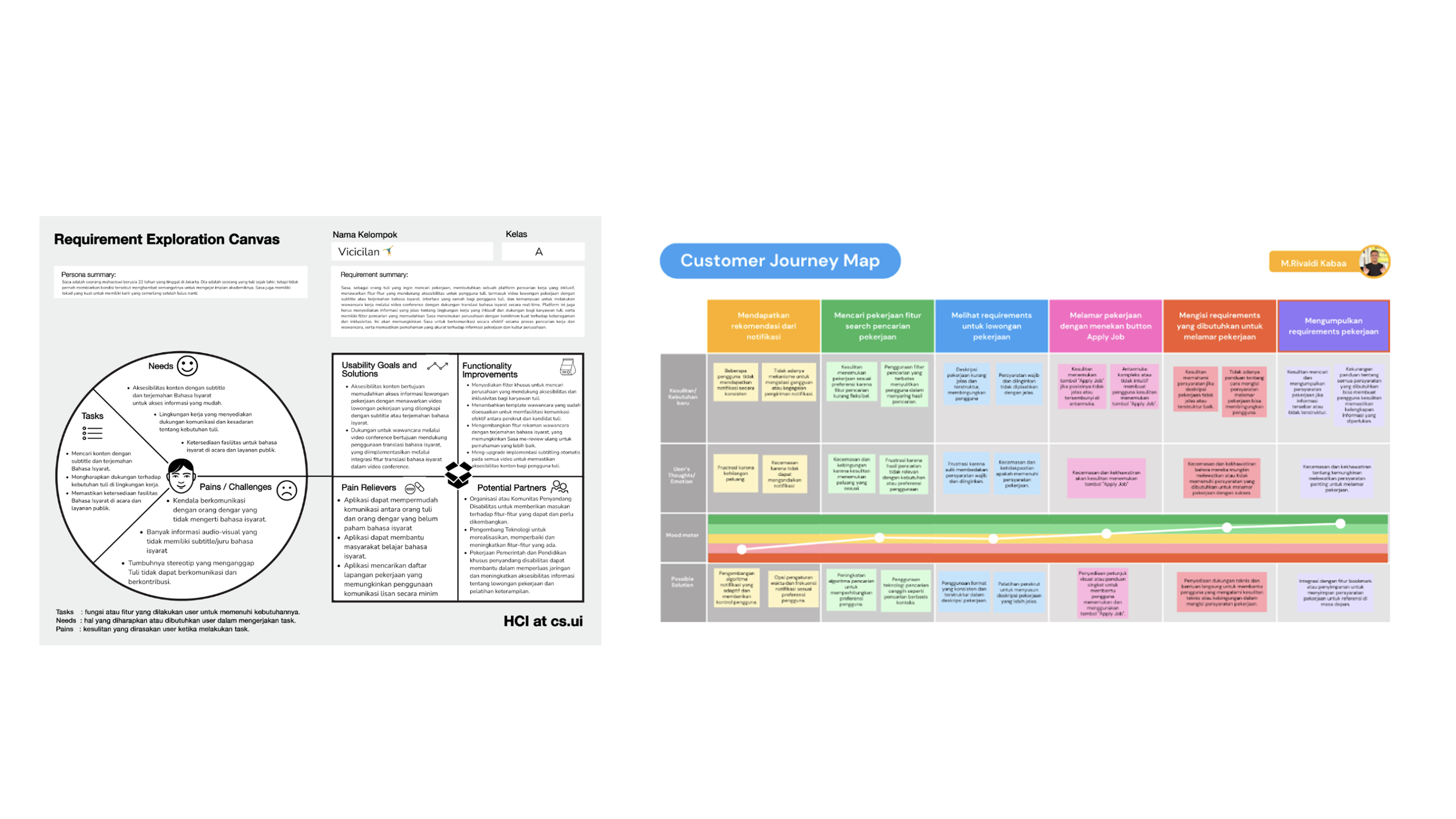
User-Centered Requirement Exploration
Applied Value Proposition Canvas, interviews, and customer journey to deeply understand the needs of deaf job seekers and HR. This ensured the system addressed real communication barriers, accessibility needs, and recruitment workflows from both user perspectives.
Accessible Interaction Flow & Information Architecture
Designed structured user journeys and task flows for core features such as job search, application tracking, interview preparation, and candidate management. Information architecture was optimized to reduce cognitive load and support intuitive navigation for users with varying digital literacy levels.
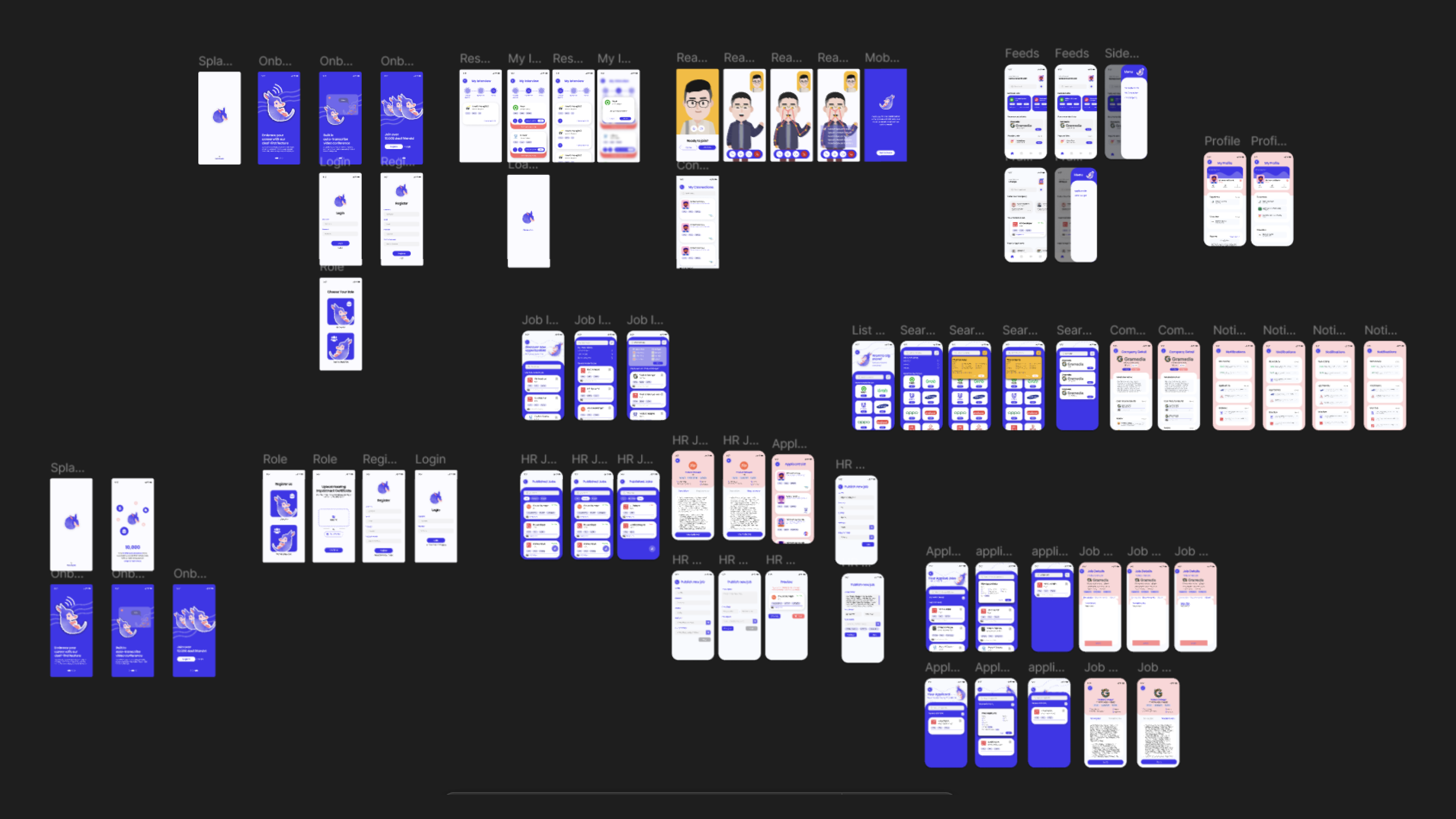
Iterative Prototyping & Usability Evaluation
Developed low- and high-fidelity prototypes and validated them through usability testing and SUS evaluation. Iterative improvements were made based on real user feedback, resulting in a SUS score of 77.64, indicating good overall usability with opportunities for further refinement.
REFLECTION
This project strengthened my ability to design inclusive digital products by applying interaction design and accessibility principles in a real-world context. I learned how to translate complex social and communication challenges into structured user flows, test assumptions with real users, and iteratively refine designs based on qualitative and quantitative usability insights.
This project was developed as an academic interaction design project and is not publicly accessible.